
What is Myopia?
Understanding short-sightedness and why early management matters.
Understanding Myopia
Myopia (short-sightedness) is a common refractive condition where distant objects appear blurred. Prevalence has been increasing worldwide, particularly in parts of East Asia, and it is recognised as an important public health concern.
While many children develop mild myopia, higher levels are associated with increased risk of retinal detachment, glaucoma, and myopic maculopathy later in life. Managing myopia progression in childhood can help reduce the likelihood of developing higher levels of myopia and associated complications.
By 2050, an estimated 50% of the world's population will be affected by myopia, with 20% having high myopia.
Why Early Management Matters
High myopia significantly increases the risk of serious eye conditions later in life. Early intervention is critical to protecting long-term vision health.
Retinal Detachment
High myopia stretches and thins the retina, significantly increasing the risk of retinal tears and detachment, a sight-threatening emergency.
Glaucoma
People with high myopia have a two to three times greater risk of developing glaucoma, a progressive condition that can lead to permanent vision loss.
Myopic Maculopathy
Degeneration of the macula caused by axial elongation of the eye. One of the leading causes of irreversible blindness in high myopes.
Cataracts
High myopia is associated with earlier onset of cataracts, increasing the likelihood of requiring surgical intervention at a younger age.
There is No Single Solution
Myopia management is an evolving field. Current strategies supported by published evidence include specially designed spectacle lenses, contact lenses, low-dose atropine eye drops, and RLRL therapy. Each approach has its advantages and limitations.
Spectacle Lenses
Specially designed myopia control spectacle lenses, such as defocus-incorporated lenses, can help slow axial elongation compared to standard single-vision lenses.
Contact Lenses
Orthokeratology and soft multifocal contact lenses are used to temporarily reshape the cornea or modify peripheral defocus to reduce myopia progression.
Atropine Eye Drops
Low-dose atropine has demonstrated efficacy in slowing myopia progression. Requires ongoing clinical supervision and monitoring for side effects.
RLRL Therapy
EyerisingRepeated Low-Level Red-Light therapy is a non-invasive, non-contact treatment delivered via a handheld device. Clinical studies have shown significant reductions in axial elongation with a strong safety profile.
An Evidence-Based Option
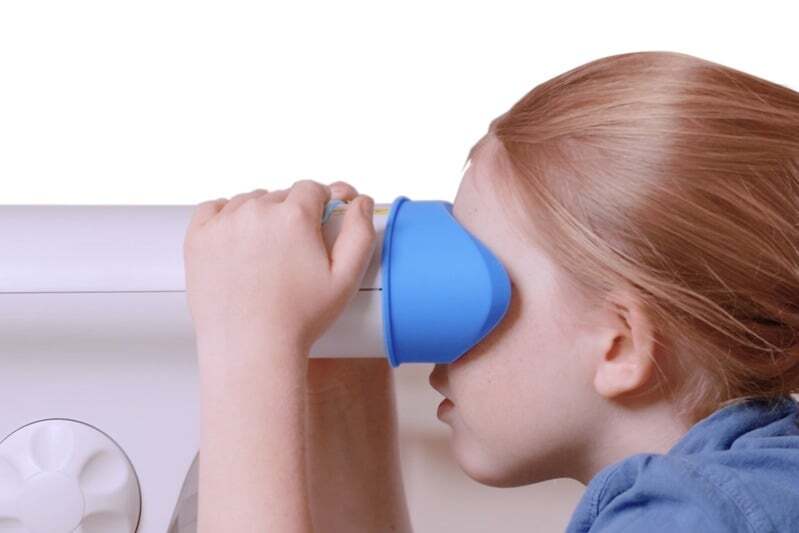
Eyerising International has developed the Eyerising Myopia Management Device, which delivers RLRL therapy for children aged 3–16 years old.
Published clinical studies have reported reductions in axial elongation and slowing of myopia progression, with some studies reporting effects of up to 87.7% compared to control groups. The device is designed for home use under professional supervision, with a protocol of 3-minute sessions, twice daily, 5 days per week, with a minimum of 4 hours between sessions.
The Eyerising Myopia Management Device is available exclusively through optometrists and ophthalmologists. Outcomes may vary for each patient.
Learn About the Device